Choosing between a gas boiler and an electric boiler is a major decision for homeowners looking to upgrade or replace their heating system. Both options provide heat and hot water, but they differ in cost, efficiency, installation, running expenses, and environmental impact. Understanding these differences helps you make the right choice based on budget, home needs, and long-term savings.
What Is a Gas Boiler
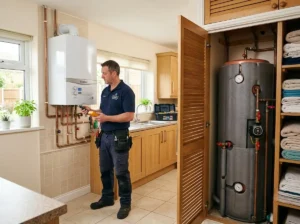
A gas boiler uses natural gas to heat water for central heating and hot water systems. These boilers are common in UK homes and deliver reliable heating with fast warm‑up times. Modern gas boilers are highly efficient and can significantly reduce energy waste.
What Is an Electric Boiler
An electric boiler uses electricity to heat water rather than burning gas. Electric boilers are compact, quiet, and easier to install because they do not require flues or gas lines. They are suitable for smaller homes, apartments, or properties without natural gas connection.
Efficiency Comparison
Gas Boiler Efficiency
Gas boilers generally offer high efficiency, especially condensing models used in most UK homes. These boilers recover heat from exhaust gases, converting more fuel into useful heat. A typical modern gas boiler can reach efficiencies of over 90 %, making them cost‑effective for larger heating demands.
Electric Boiler Efficiency
Electric boilers are nearly 100 % efficient at the point of use because almost all electricity is converted into heat. However, electricity generation and grid losses can affect overall environmental efficiency. While electric boilers reduce waste in the home, they may not always be the cheapest option depending on electricity costs.
Running Costs
Gas Boiler Running Costs
Gas remains one of the most affordable fuels for domestic heating in the UK. Gas boiler running costs are generally lower than electric boilers, especially for larger homes with higher heat demand. Because gas prices per kWh are currently lower than electricity prices, gas boilers typically cost less to run.
Electric Boiler Running Costs
Electric boilers tend to have higher running costs due to higher electricity prices. They are most cost‑effective in smaller homes or in properties where heating demand is low. Households using renewable electricity sources may find electric boilers more attractive.
Installation Considerations
Gas Boiler Installation
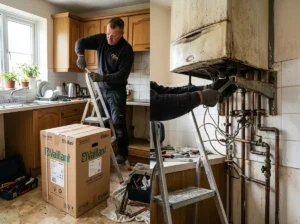
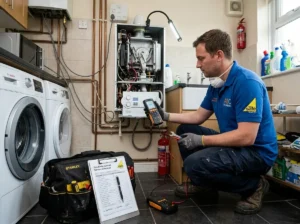
Installing a gas boiler requires a qualified Gas Safe registered engineer and a flue for exhaust gases. Gas pipework must be connected safely, and annual safety checks are recommended. Installation complexity can increase costs compared with electric systems.
Electric Boiler Installation
Electric boilers are simpler to install because they do not need gas lines or flues. This reduces installation time and cost. They are ideal for homes where gas supply is not available or where minimal disruption is preferred.
Environmental Impact
Gas Boiler Emissions
Gas boilers produce carbon dioxide (CO₂) and other emissions during combustion. While modern condensing boilers are more efficient and cleaner than older models, they still rely on fossil fuels, contributing to greenhouse gas emissions.
Electric Boiler Emissions
Electric boilers produce zero emissions at the point of use. Their environmental impact depends on how electricity is generated. If the electricity comes from renewable sources, electric boilers can offer a greener solution than gas.
Heating Performance
Gas Boiler Performance
Gas boilers heat water quickly and maintain strong performance in larger homes. They provide consistent warmth and can handle multiple radiators and high hot water demand without significant performance drops.
Electric Boiler Performance
Electric boilers deliver steady heat but may struggle in very large homes with high heating loads. They work best in small to medium properties or as supplementary systems in larger buildings.
Lifespan and Maintenance
Gas Boiler Maintenance
Gas boilers require regular maintenance, including annual servicing by a qualified engineer. Proper servicing maintains efficiency and ensures safety. With routine care, gas boilers can last 10–15 years or more.
Electric Boiler Maintenance
Electric boilers have fewer moving parts and require less frequent servicing. Their simplicity often means lower maintenance costs overall. Electric boilers can also have long service lives when installed correctly.
Safety Considerations
Gas Boiler Safety
Gas boilers must be installed and serviced by Gas Safe registered professionals. Carbon monoxide safety is a key concern, so proper ventilation and regular checks are essential.
Electric Boiler Safety
Electric boilers do not produce combustion gases, so carbon monoxide risk is eliminated. However, electrical safety and correct wiring are critical to prevent fire hazards.
Cost Summary
Gas boilers typically cost more to install but are cheaper to run in larger homes. Electric boilers are easier and cheaper to install but have higher running costs in many cases. The right choice depends on your home size, heat demand, fuel availability, and long‑term budget.
Which Is Better for Your Home?
Choose a Gas Boiler If
You have access to mains gas, require heating for a medium to large home, and want lower running costs. Gas boilers are ideal when hot water demand is high and consistent warmth is needed throughout the property.
Choose an Electric Boiler If
You live in a smaller home, do not have access to mains gas, or prioritise simpler installation and lower maintenance. Electric boilers also suit homes with low heating demand or where renewable electricity is available.
Final Thoughts
Gas boilers and electric boilers both have advantages and limitations. Gas boilers remain cost‑effective for larger homes with higher heating needs, while electric boilers offer simplicity, cleaner operation, and easy installation. Assess your home’s requirements, fuel availability, and long‑term costs to choose the best system for your heating needs.